Wedge Distance Chart: 50° to 60° Wedge Yardages and Gapping
Where each wedge loft from 50 to 60 degrees sits in a set, how to space them, and a blank chart to fill in with your own carry distances.
A wedge distance chart that lists one yardage per loft only works if the golfer who wrote it swings like you. So this page gives a sourced range for each wedge type as a sanity check, shows how far apart to space wedges from 50 to 60 degrees, and gives you a blank chart to fill in with carry distances you have measured yourself.
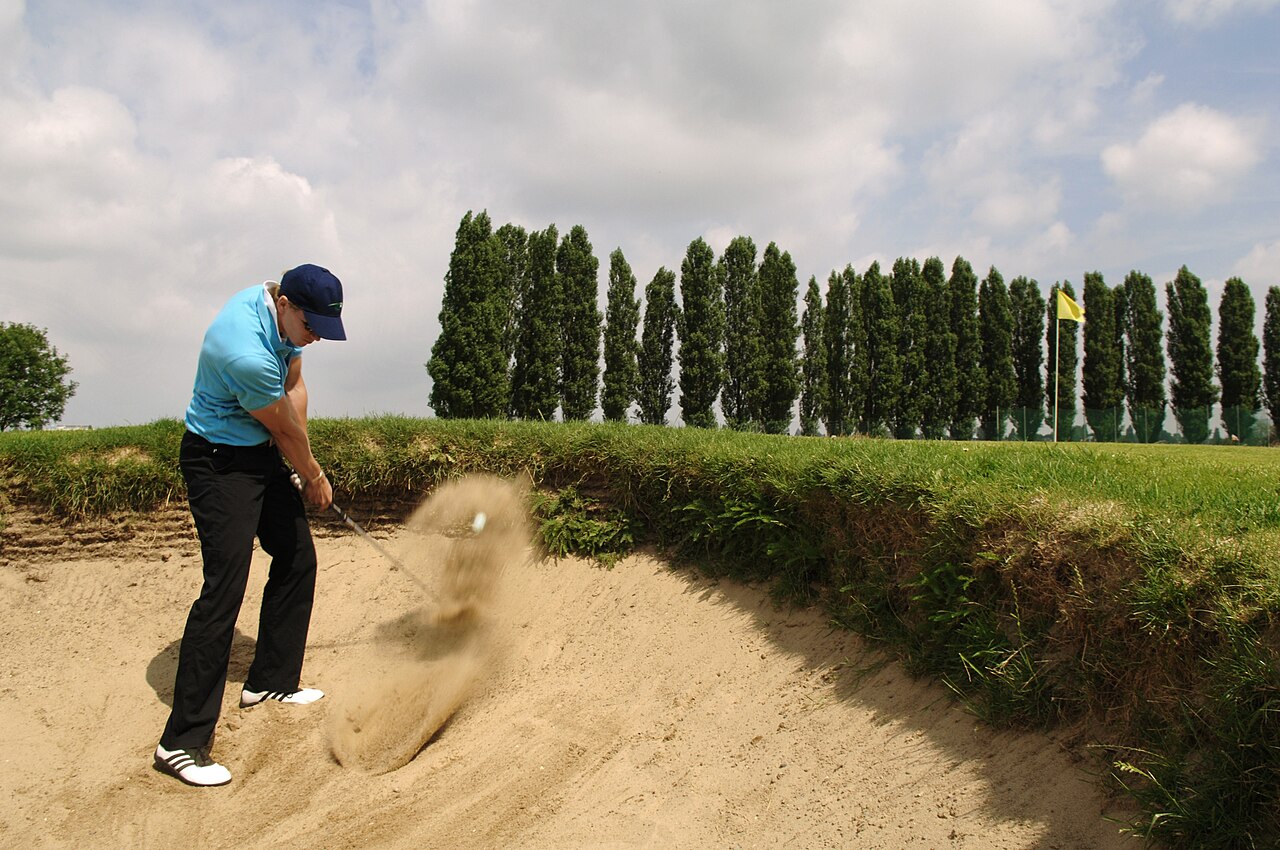
Typical wedge distances
For a rough sense of scale, Callaway's wedge buying guide lists typical distances by wedge type. It does not say whether these are carry or total distance, or for which type of golfer, so treat them as a wide sanity check and not a target. If your numbers sit outside a range, that is common; use the log further down for your own.
| Wedge type | Loft (Callaway) | Typical distance |
|---|---|---|
| Pitching wedge | 42° to 48° | 100 to 130 |
| Gap / approach wedge | 49° to 53° | 85 to 115 |
| Sand wedge | 54° to 58° | 60 to 90 |
| Lob wedge | 59° to 64° | 40 to 70 |
Brands label the roles slightly differently, so read the number stamped on your own club. A pitching wedge is usually somewhere from 42° to 48°, and Callaway notes that most were 46° in the past. For how wedge lofts fit with the rest of the bag, see the golf club loft chart.
How to space your wedges
Titleist's gapping advice is to put about 4 to 6 degrees of loft between wedges, which it says produces yardage gaps of roughly 10 to 15 yards (Titleist wedge gapping). The same idea of even steps runs through our golf club gapping guide. The aim is no big hole in the middle of the set, not a particular loft.
- Read the stamped loft on your pitching wedge.
- Add 4 to 6 degrees to find the loft of your next wedge.
- Repeat from that wedge until you reach about 58° to 60°, then stop.
Illustrative example, not a recommendation. With a 46° pitching wedge, 50°, 54° and 58° wedges give 4° steps all the way down. For fewer clubs, 50°, 56° and 60° give steps of 4°, 6° and 4°, still inside the guide. With a stronger 42° pitching wedge, a 6° step lands on 48°.
What a 50, 52 or 54 degree wedge is for
The 50° and 52° are the usual gap or approach wedges, filling the space under the pitching wedge. The 54° falls in Callaway's sand wedge range. Within a type, the lower-lofted club goes farther, by roughly the 10 to 15 yards per 4 to 6 degrees noted above.
What a 56 degree wedge is for
The 56° is the classic sand wedge loft and falls in Callaway's 60 to 90 yard sand wedge range. Callaway does not say whether that range is a full swing, so many golfers will carry it farther; use your own full-swing number from the log below.
What a 58 degree wedge is for
A 58° sits right between a 56° and a 60°, a much smaller jump than the 4° to 6° step, so the two clubs will overlap. Callaway's table puts it in the sand wedge range, though some brands list it as a lob wedge. Compare carries on the same day and keep whichever fits a bigger gap in your set.
What a 60 degree wedge is for
The 60° is the lob wedge most golfers think of, and Callaway's range for lob wedges is 40 to 70 yards. Higher lofts leave less margin on thin or heavy contact, so many players practise a controlled partial swing with a 60°. The log below has columns for that.
Your wedge distance chart
Fill this in from a range session or launch monitor. Use carry, the distance to the first landing, not roll (see carry vs total distance). Print the page to take it with you.
- Warm up first, then use the same ball type for every club.
- Hit about ten balls for each wedge and swing length.
- Drop obvious mishits, such as a thin or heavy strike, and record the middle carry of the rest, not the best one.
- Note the wind and whether the range is flat, because both move carry.
For the partial swings, use repeatable reference points. These are starting points to adjust, not fixed rules: for a half swing, take the lead arm back to about hip height; for a three-quarter swing, to about shoulder height. Keep the same tempo for each.
| Wedge loft | Full swing | Three-quarter | Half swing |
|---|---|---|---|
| Pitching wedge | |||
| 50° | |||
| 52° | |||
| 54° | |||
| 56° | |||
| 58° | |||
| 60° |
Once it is filled in, look for gaps between the full-swing numbers. If they are well outside the 10 to 15 yards above, a half or three-quarter swing may cover them before you need another club.
Where the calculator stops
Our club distance calculator estimates irons down to the pitching wedge only. It does not estimate gap, sand or lob wedges, because no verified step size exists for them. For the rest of the bag, see the full club distance chart.